Conservation at Sedgwick County Zoo
Conservation
Sedgwick County Zoo is committed to playing an active role in global conservation efforts. Through research, advocacy, and field projects, the Zoo works to protect and restore threatened species and their habitats around the world.
Featured Field Work
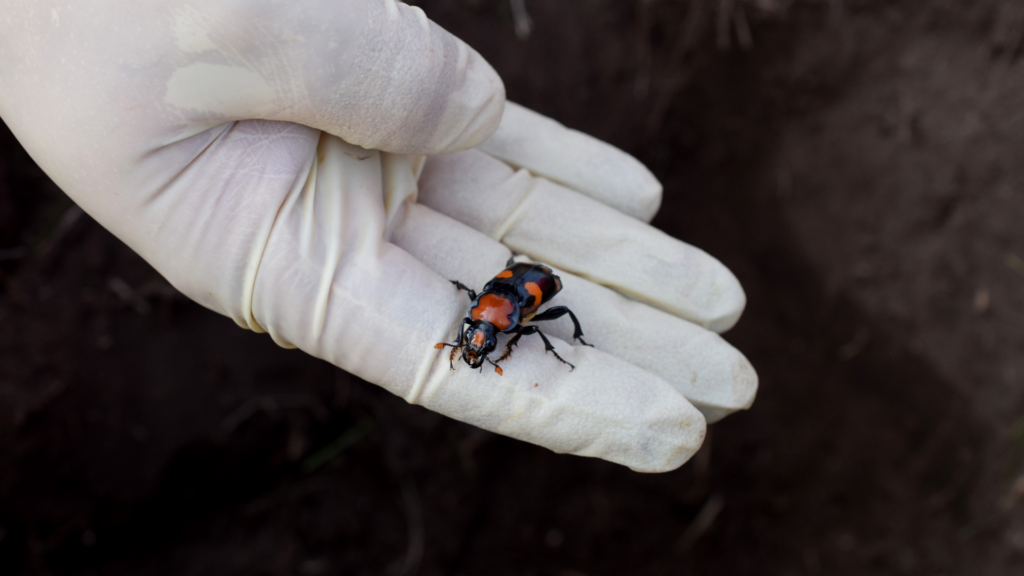
American Burying Beetle
The American burying beetle plays a crucial role in our ecosystem. These carrion beetles “embalm” dead animals with a natural fluid, accelerating decomposition and recycling nutrients back into the soil.
Unfortunately, this helpful insect has declined significantly due to habitat loss and fragmentation. Once widespread across 35 states, by 1989 only one population remained.
In collaboration with the Saint Louis Zoo, we’ve been reintroducing captive-bred beetles to southwest Missouri for over seven years. This reintroduction program aims to restore the American burying beetle to its former range and ensure its long-term survival.
The MAC Project
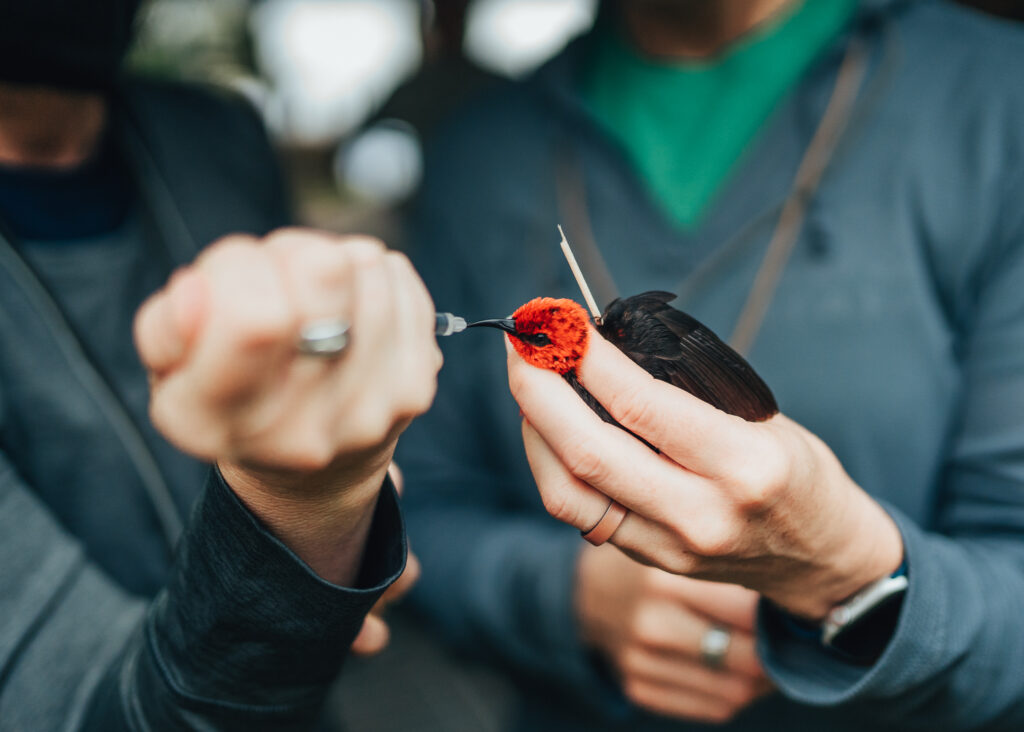
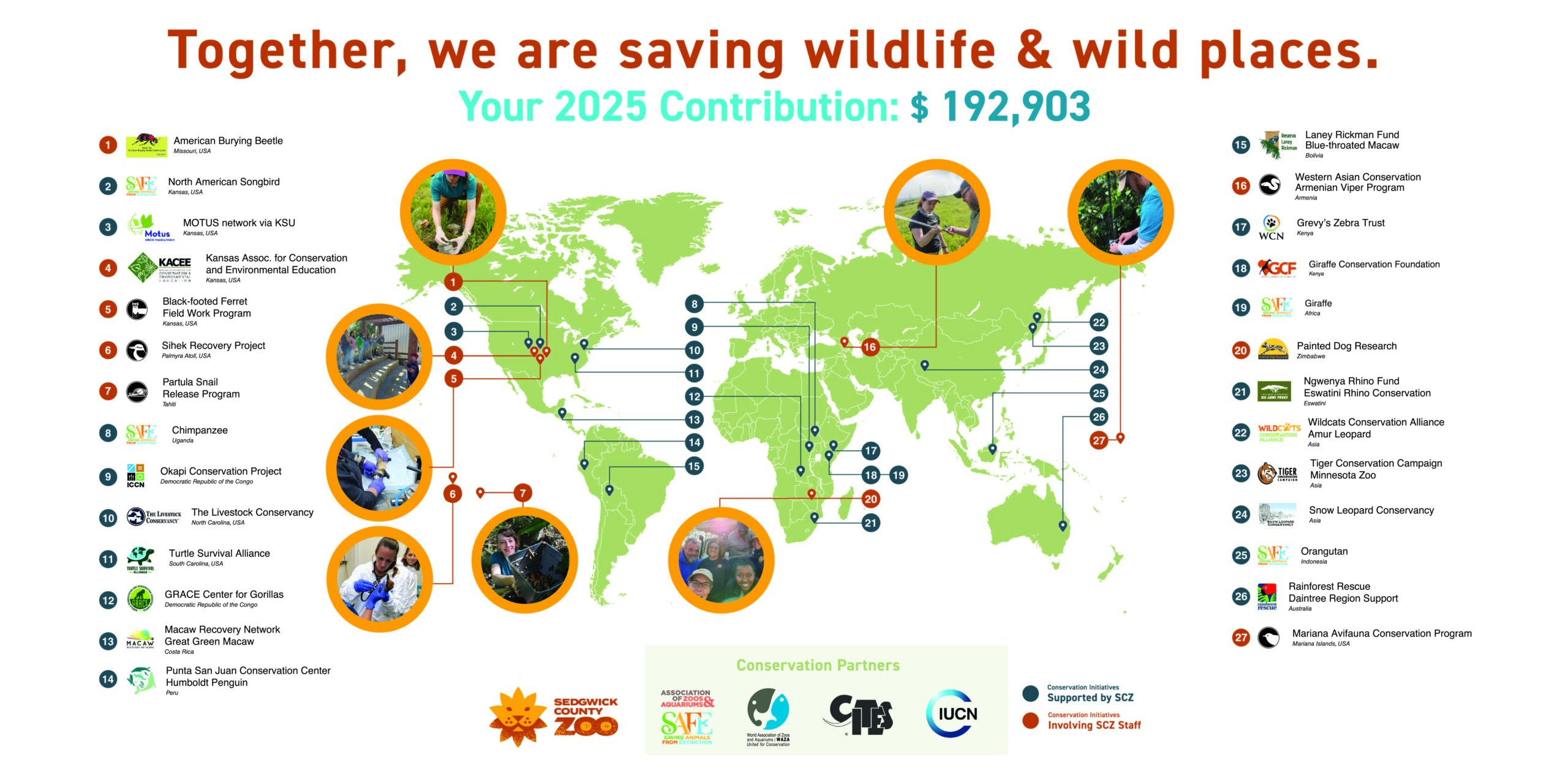
A group of our dedicated staff travels annually to the Mariana Islands to support the crucial work of the Pacific Bird Conservation and the Mariana Avifauna Conservation (MAC) project.
Watch this video to see firsthand how we’re helping endangered bird species like the Rota white-eye!

Black-footed Ferret
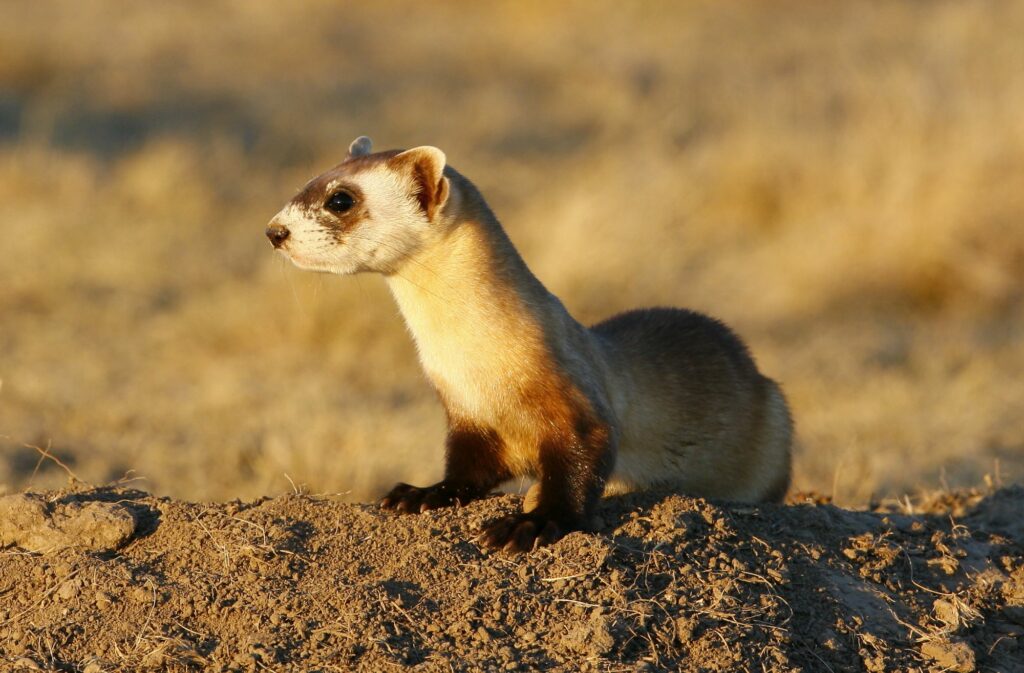
Black-footed ferrets are a flagship species, meaning that protecting them helps ensure the survival of numerous other prairie species.
Annually, several Sedgwick County Zoo employees travel to northwest Kansas to participate in the Black-footed Ferret Recovery Program.
Since 1991, state and federal agencies, in cooperation with Native American tribes, private landowners, non-profit organizations, and the North American zoo community, have reintroduced black-footed ferrets to the wild to build and supplement a healthy wild population.
To monitor these ferrets, scientists and volunteers such as ourselves conduct nighttime spotlight surveys. In late summer, efforts are made to locate litters born in the wild, where traps and transponder chip readers are used to identify individual ferrets.
After being identified and treated for diseases, the ferret undergoes an overall health check before being released back into the wild.
We are grateful to be part of this conservation effort and strive to see a healthy future for their population.
$275,490
Total contribution
20
Conservation organizations
7
Field projects
28
Employees participated in field conservation projects
Educational Programs
Inspiring Young Conservationists
Discover how we’re educating the next generation of conservationists at Sedgwick County Zoo.

Donate to Conservation
Your support matters.
Your support to Sedgwick County Zoo directly impacts our conservation and education efforts.
With your donations, we can fund critical conservation projects that help protect endangered species, preserve habitats, and promote biodiversity. Additionally, your support enables us to offer educational programs to inspire the next generation of conservationists and wildlife enthusiasts. Together, we can make a meaningful difference for the planet’s wildlife and ecosystems.